

Stora Enso has confirmed its Imatra factories have reached a significant milestone in their environmental performance and contribute to the company’s long-term sustainability goals. This is a significant step towards a more responsible future. Imatra’s factories have reduced both direct and energy-generating greenhouse gas emissions to a historically low level.
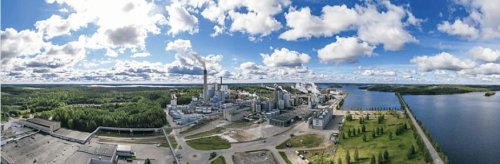
“The specific emissions of our Imatra factories (scope 1+2) are now 104 kg CO2e per tonne produced, which is a significant improvement in just a few years (2019: 191 kg CO2e). At the same time, our total emissions have decreased by more than 100 000 tonnes of CO2e compared to the 2019 figures,” says Teemu Klemetti, Environmental Manager, Stora Enso’s Imatra mills. “For the first time ever, in 2025, our wastewater volume was below 50 m3 per tonne produced, exactly 49.4 m3. In addition, our total sulfur emissions into the air were the smallest in history, as were the oxide emissions of nitrogen.”
These achievements are the result of the continuous improvement of the Imatra factories: the development and optimisation of production processes, improving energy efficiency, and a strong commitment to responsible action towards customers and the local community.
“This development reflects the dedication and cooperation of our entire staff. Over the past few years, we have systematically improved our processes to reduce emissions and increase resource efficiency. The next steps will focus on further optimising water management and progressing towards fully fossil-free operations by 2030,” continued Klemetti. “By developing our wastewater treatment and energy systems, we can support Stora Enso’s climate goals even more strongly. We will adjust our own energy production to minimise the use of fossil fuels.”
“Stora Enso’s Imatra factories are committed to promoting sustainability goals. Our journey towards lower emissions and more climate-friendly production continues step by step towards a more sustainable future,” says Klemetti.

