
Labelisten has installed its third HP Indigo 200K digital press, as the German packaging specialist extends its digital flexible packaging capacity. The press is located at a dedicated facility in Bavaria that has been designed to allow the company to continue the strong growth it has recorded since entering the market for digital flexible packaging.
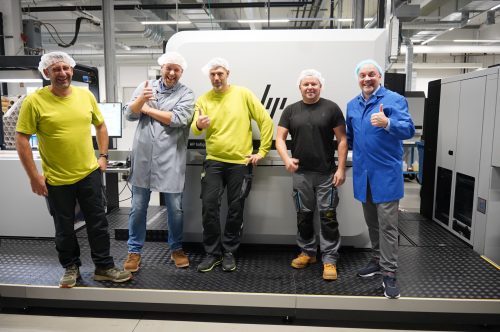
The HP Indigo 200K is a mid-web digital printing press that produces on-demand flexible packaging, labels, and shrink sleeves at a maximum speed of 56 m/min (in enhanced productivity mode), using liquid electrophotography (LEP) printing technology and with up to seven ink channels.
Earlier this year, Labelisten opened a dedicated 2,000-square-metre flexible packaging production site in Thiersheim, Bavaria. Built with further growth in mind, the facility brings the company’s entire flexible packaging production together under one roof while leaving space for additional capacity as the business continues to expand. Labelisten has even taken its business model outside of Europe and opened an office in New York to develop its presence in the US market. Packaging for US customers is currently produced in Germany.
The latest investment comes five years after Labelisten first entered the market for digital flexible packaging. Since 2021, the printer has grown its output of digital flexible packaging by more than 80% a year on average, now employs more than 100 people in its pouch business, and has gone from one HP Indigo 200K to three. Around 75% of Labelisten’s pouch orders are below 5000 units and the company processes 350 pouch jobs per month.
Mark Malekpour, Regional Business Manager, HP, said, “Labelisten is a great example of what we mean when we talk about the digital pouch factory.
“It has built a business model combining a highly standardised web-to-print offering with digital production and fast delivery. The third HP Indigo 200K shows how this model can scale as the business continues to grow.”
Labelisten Founder and CEO Frank Plechschmidt said, “Our customers don’t ask what print technology we use, they ask, ‘Can I have it tomorrow?’. Even jobs with up to 350,000 pieces are getting common.”