As retailers and manufacturers face increasing pressure to improve productivity and maintain product availability, DS Smith has collaborated with Delhaize, a multinational retail and wholesale holding company, to increase output on a wine packaging line by 27%. At Delhaize’s winery in Belgium, they redesigned both the packaging and the machinery used to process it, increasing throughput by 400 packs per hour.
A key focus of the project was Ahold Delhaize’s bag-in-box wine range. The winery in Zellik produces wine products for both Delhaize in Belgium and Albert Heijn in the Netherlands, making production efficiency and reliability essential for a smooth supply chain across multiple retail markets. Despite a competitive marketplace, the Delhaize brand has remained resilient, reporting growth in their bag-in-box wine sales. As the packaging format becomes increasingly important within the wine portfolio, Delhaize wanted to create additional capacity and efficiency within their overall production process.
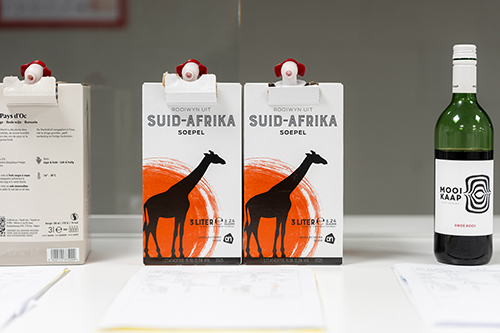
To address this challenge, Delhaize chose an integrated approach. Rather than sourcing the cardboard packaging and machinery separately, the companies collaborated to design and build a dedicated forming machine that is specifically engineered for Delhaize’s bag-in-box packaging format and production requirements. The machine ensures that both the corrugated packaging and machine performance are engineered together rather than optimised separately, resulting in optimum stability and efficiency across the manufacturing process, including improved pack quality and eliminating nearly all interruptions on the production line.
As a result of the new approach, the quality of the packaging improved and the production speeds increased from 1,500 to 1,900 product packs per hour, increasing throughput by 27%. The line became more reliable, required fewer operators and made more efficient use of warehouse capacity. The reduced number of operators required to run the line enabled Delhaize to redeploy resources to strengthen quality control activities. Storage efficiency also improved, with warehouse capacity increasing from 5,000 to 6,000 packs per storage location.