Fenton Packaging Solutions and Swedish packaging manufacturer Quadpak are expanding the availability of UN-approved Bag-in-Box (BiB) packaging for detergents, professional cleaning products and suitable chemical applications across the UK, Ireland and United Arab Emirates.
The cooperation combines Quadpak’s flexible packaging manufacturing capabilities with Fenton’s distribution network and technical support. The companies are targeting applications where Bag-in-Box can provide an alternative to rigid plastic containers, including suitable products classified within Packing Groups II and III.
Quadpak manufactures flexible packaging for liquid products, including its Cheertainer design, stand-up pouches, pillow bags and customised solutions. Its UN-certified Bag-in-Box range includes 5, 10 and 20-litre formats.
“We are delighted to be working with Fenton Packaging Solutions to ensure that Quadpak’s Bag-in-Box and flexible packaging solutions reach a wider audience in the UK, Ireland and the United Arab Emirates,” said Stellan Flensmo, Managing Director, Quadpak.
According to the companies, Bag-in-Box can reduce packaging material requirements and improve storage and transport efficiency compared with conventional rigid plastic jerry cans. Quadpak reports potential plastic reductions of approximately 80% to 90%, depending on the packaging format and application.
“We have been working closely with Quadpak for several years to ensure that we can offer a wide range of UN-approved Bag-in-Box alternatives for suitable products classified within Packing Groups II and III, subject to product compatibility, packaging specification and applicable transport requirements,” said Chris Warren, Managing Partner at Fenton Packaging Solutions.
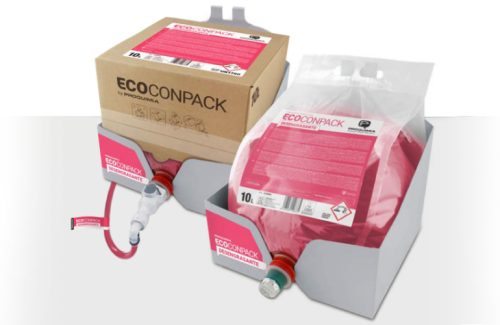
The companies highlighted Spanish cleaning and hygiene manufacturer Proquimia as an example of the technology’s use. Its Ecoconpack system, introduced in 2011, uses Bag-in-Box packaging for concentrated cleaning and disinfection products alongside controlled dosing equipment. According to Proquimia, the system has achieved a 95% reduction in plastic waste and a 75% reduction in transport and storage costs.
The packaging format can also incorporate dispensing and dosing systems, while its reduced volume when empty can help improve logistics efficiency and reduce packaging waste.