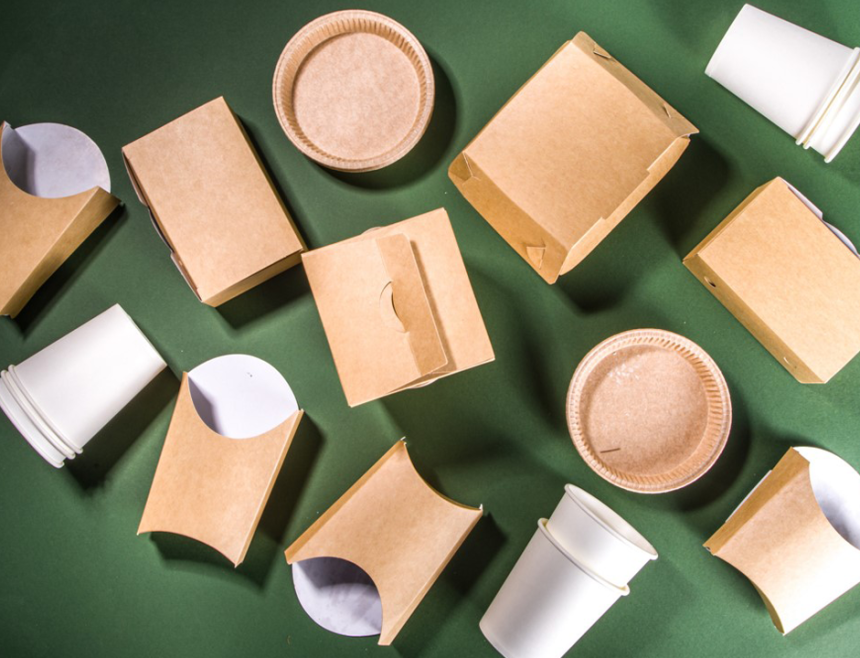


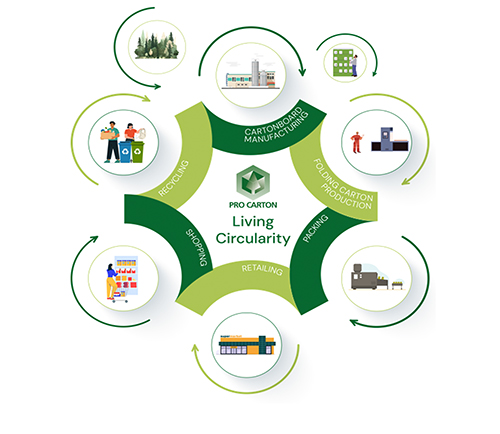
The packaging industry is actively responding to the growing demand for sustainability by focusing on materials that can remain in circulation longer. Recycling is central to this effort, creating a circular effect that benefits both the environment and the economy. To fully realise this potential, packaging must be designed for recyclability and supported by effective collection and recycling systems. Cartonboard, with its renewable fibres and proven recyclability, is emerging as a leading solution, enabling a circular system where valuable materials are continuously recovered and reused in new packaging.
Recent research underlines the urgency and opportunity. The Pro Carton 2025 Packaging Perceptions Consumer Survey, of over 5,000 respondents across Germany, Italy, Spain, France, and the UK, showed a clear and growing preference for sustainable packaging. 89% of consumers now prefer cartonboard over plastic alternatives, particularly younger generations. Remarkably, 62% of respondents reported that they have increased recycling activity over the past year, demonstrating that awareness is creating meaningful action.
Consumer Commitment to fibre-based packaging remains strong
Consumer behaviour increasingly links packaging with brand perception too. An average of 40% of Europeans have changed their preferred brand in the past 12 months based on packaging alone. This highlights the critical role of sustainable packaging not only as a material choice but as a driver of brand loyalty and repeat purchases.
Fibre-based packaging plays a central role in achieving a circular economy. Wood fibres in cartonboard can be recycled more than 25 times without significant loss of quality, ensuring that materials remain in circulation longer and stopping downcycling and reducing the need for virgin resources. Efficient and well trusted collection and recycling systems across Europe amplify this impact, though harmonisation remains a challenge. Countries with robust separate collection systems, such as Germany, Austria and Slovenia, consistently achieve superior recycling rates. Conversely, mixed collection systems can introduce contamination, reducing material quality and recycling efficiency.
Economic pressures are influencing consumer choices, particularly in the UK, where 79% refer to the cost of living as their primary concern. Yet, even with financial uncertainty, commitment to sustainability remains resilient. Consumers continue to balance affordability with eco-conscious purchasing, reflecting the importance of cost-effective, sustainable solutions for brands and manufacturers.
Our mission is building a resilient and self-reliant bioeconomy
Innovation in folding carton design and functionality has never been more important. Sustainable packaging must meet expectations of recyclability, ease of use, and product protection, while inspiring trust and confidence. Industry initiatives, such as the European Carton Excellence Award (ECEA), showcase how design, sustainability, and functionality can be combined. The ECEA is the most prestigious in cartonboard packaging, acknowledging and rewarding the very best in ecological packaging design. The Pro Carton student competitions: Pro Carton Young Designers Award and Pro Carton Student Video Award, play pioneering roles in promoting sustainable packaging and innovation amongst students across Europe, helping to develop the next generation of sustainable innovators. It’s initiatives like these that make a lasting impact on people and industry.
This year, we saw tremendous growth in the public award across all three competitions, with participation increasing by more than 20%.
The path to a truly circular economy requires collaboration across the value chain. Material suppliers, converters, brand owners, retailers and policymakers must work together to develop reusable and recyclable solutions and engage consumers. At Pro Carton, we continue to champion fibre-based packaging as a model of circularity, recognising its ability to reduce plastic use, minimise waste, and meet evolving consumer demands.
Ultimately, the industry’s role goes beyond materials; it shapes behaviour and builds trust. Consumers are willing to act, and their choices increasingly reflect environmental responsibility. By innovating with sustainability at the core, embracing circularity, and responding to market expectations, the cartonboard industry can lead Europe toward a resilient bioeconomy while creating value for brands and consumers alike.
In times of deglobalisation, building strong European resilience is key. Achieving independence from imported materials, using renewable, locally sourced resources, producing and recycling packaging within Europe, and securing future-ready jobs are what we stand for.
Sustainable packaging is central to the credibility, competitiveness, and long-term success of the industry. By designing for recyclability and promoting circularity, cartonboard and folding carton manufacturers and brand owners can meet consumer demand and ensure that fibre-based solutions remain at the heart of a sustainable, circular economy.
Find out more information here: Home – Pro Carton