Laserclean b.v. has developed a new laser cleaning system for corrugated packaging manufacturers, designed to provide an in-house solution for cleaning ceramic anilox rollers used in flexographic printing.
The ALCS 5000 S-OFL CC system combines a fully automated cleaning cabinet with a separate laser unit, allowing operators to clean anilox rollers offline. The laser unit can also be disconnected from the cabinet and used for online cleaning within the printing machine.
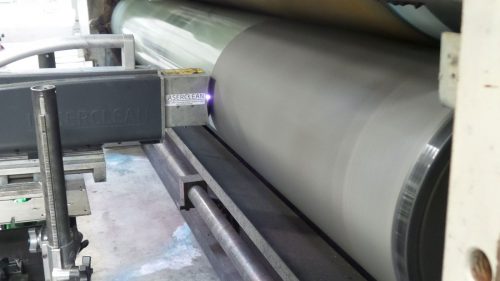
According to Laserclean, the system has been developed to address the challenges associated with removing polymer and pigment residues from modern ceramic anilox rollers. As anilox cell sizes have become smaller, conventional cleaning methods can struggle to remove accumulated deposits, particularly thin polymer layers that affect surface tension and ink transfer.
The company explains that its fibre laser technology uses short pulses of energy to heat and vaporise contaminants within the anilox cells without damaging the underlying ceramic surface. Removing these deposits is intended to restore the roller’s surface characteristics and improve ink transfer to the printing plate. Maintaining clean anilox rollers can reduce the need to adjust ink formulations to compensate for poor ink transfer. The company reports that tests have indicated potential annual ink cost savings of 3–5% when rollers are kept clean.
The system operates at an average cleaning speed of approximately 4cm per minute, allowing a 2,400mm-long roller or sleeve to be cleaned in around 60 minutes. Cleaning is automated, with operators selecting a pre-programmed roller reference to initiate the process.
The ALCS 5000 S-OFL CC cabinet accommodates rollers up to 3,500mm in length, with larger versions available on request. The laser system uses a fibre laser source with a stated operating life of 30,000 hours.
Laserclean also highlights the environmental benefits of the process, which does not require water, cleaning chemicals or compressed air. The company states that the laser unit consumes less than 1,000W during operation and that chemical consumption associated with anilox cleaning can be reduced by up to 80%.
The company estimates annual filter costs at less than €500, depending on usage, and indicates that its laser cleaning systems typically cost between €100,000 and €200,000, depending on the configuration and whether offline or combined offline/online cleaning is required.